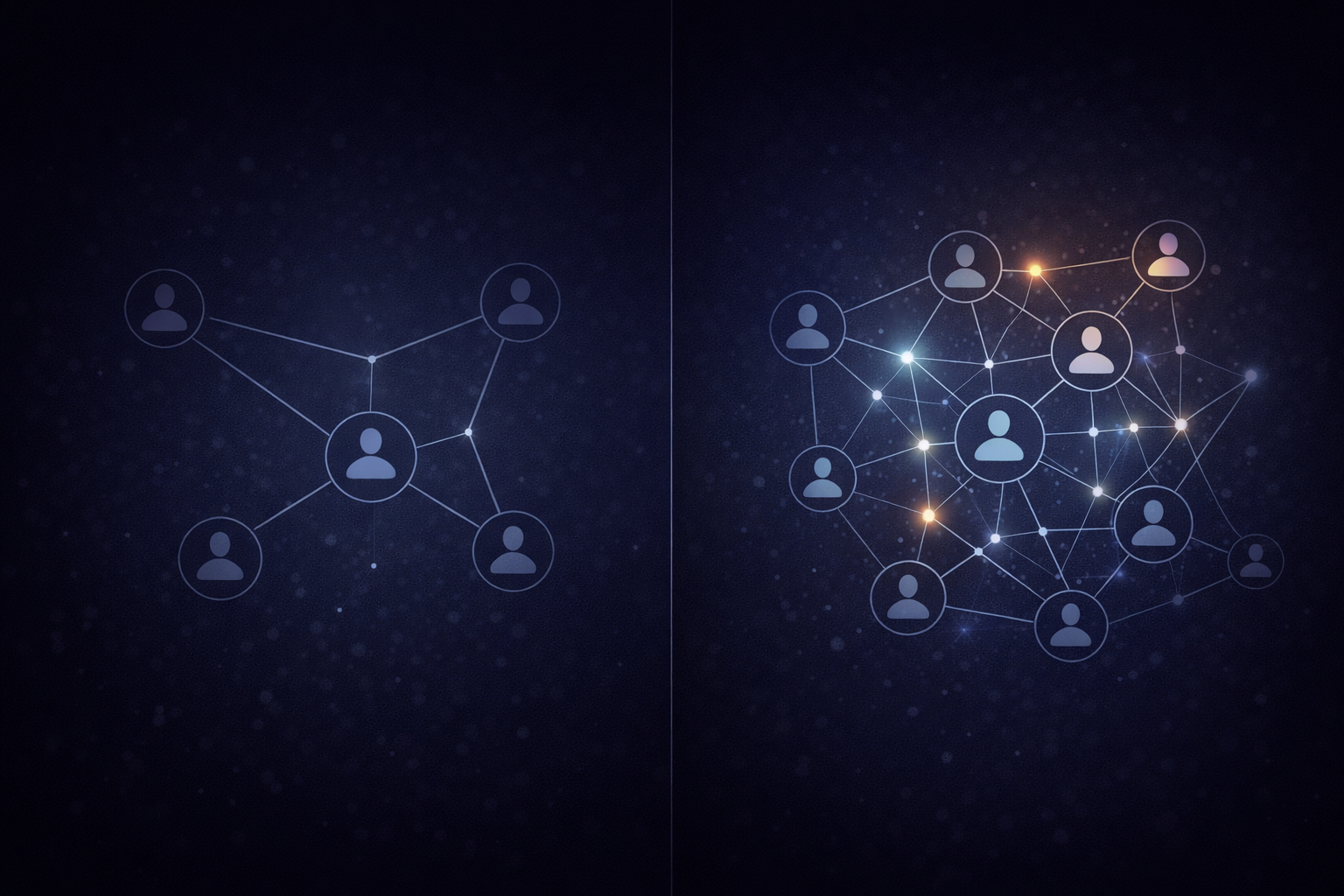
Remote teams today are more connected than ever.
They communicate across time zones. They collaborate through structured systems. They maintain visibility through dashboards, updates, and workflows. From the outside, everything appears functional.
Work moves. Projects progress. Deadlines are met. But something less visible often begins to weaken.
Not coordination. Connection.
Communication Is Not the Same as Cohesion
Most distributed teams invest heavily in communication. More check-ins. More updates. More documentation.
The assumption is simple:
If communication improves, culture strengthens. But communication alone does not create cohesion. A team can communicate frequently and still feel disconnected. Messages can be clear. Updates can be consistent. Processes can be efficient.
And yet, team members may still feel like individuals working in parallel rather than a group moving together. Because communication organizes work. It does not automatically create shared experience.
What Cohesion Actually Requires
Cohesion is not built through information exchange. It is built through interaction under shared conditions. Strong teams tend to form cohesion when they experience:
- mutual reliance
- time-sensitive decision-making
- collaborative problem-solving
- clearly defined but interdependent roles
These conditions create something communication alone cannot. They create shared reference points. Moments where team members must think together, adapt together, and respond together.
Over time, these moments build trust. Not abstract trust. Practical trust. The kind that comes from seeing how others think, react, and contribute in real situations.
Why Remote Teams Struggle to Create It
In physical environments, shared experience happens naturally. Unplanned conversations. Quick problem-solving moments. Spontaneous collaboration. These interactions are not scheduled. They emerge from proximity. And over time, they create a layer of connection that strengthens how teams operate.
Distributed teams do not have this advantage. Interaction becomes intentional and structured. Meetings are scheduled. Discussions are planned. Communication is often asynchronous. While this improves efficiency, it reduces exposure to dynamic interaction.
Most conversations become outcome-driven. Status updates. Task clarifications. Progress reviews. Important for coordination. But limited in building cohesion.
The Shift Toward Individual Execution
Over time, a subtle shift begins to appear in many remote teams. People start solving problems independently. Not because they are encouraged to. But because it feels faster.
Collaboration begins to feel like overhead. Discussion becomes something to minimize. Execution becomes something to optimize. From a productivity standpoint, this can look efficient.
Work gets done. But something important is gradually lost.
Shared thinking.
And without shared thinking, teams stop developing collective ownership. Each person becomes responsible for their part. But fewer people feel responsible for the whole.
Why This Matters More Than It Appears
The impact of weak cohesion is rarely immediate. Deadlines are still met. Output remains stable. Operations continue. Which makes the issue easy to overlook. But over time, the effects become visible:
- fewer ideas are shared
- less debate happens
- problem-solving becomes isolated
- initiative declines
The team remains functional. But less adaptive. Less engaged. Less invested in outcomes beyond assigned tasks. And when challenges arise, the absence of strong cohesion becomes more noticeable. Because the team has not built the habit of thinking together.
The Missing Layer: Designed Shared Experience
If remote teams do not naturally generate shared experience, then it must be designed. Not through more meetings. Not through more communication. But through structured interactions that create:
- interdependence
- real-time collaboration
- decision-making under pressure
- visible contribution from each participant
These experiences do not need to be constant. But they need to exist. Because they create the moments that teams remember.
The situations where people see how others think. Where trust is reinforced through action, not assumption. Where communication becomes dynamic rather than transactional.
From Coordination to Connection
Most distributed teams have already solved coordination. They have the tools. They have the systems. They have the processes.
The next challenge is different. It is not about making work more efficient. It is about making teams more connected. And connection does not come from adding more structure.
It comes from introducing the right kind of experience.
The Leadership Shift
For leaders, this requires a change in perspective. Instead of asking: “How do we improve communication?”
The more important question becomes: “How do we create moments where our team actually experiences working together?”
Because cohesion is not built through clarity alone. It is built through shared experience. Especially the kind that requires people to rely on each other in real time.
Final Thought
Remote teams do not struggle because they lack communication. They struggle because they lack shared experience.
Coordination keeps work moving. But shared experience is what transforms a group of individuals into a team.
In distributed environments, that transformation does not happen by accident. It must be designed. Because without it, teams may continue to function. But they will slowly lose the connection that makes them strong.